
Speaking Task 8: Describing an Unusual Situation
Task 8 shows you an unusual picture and you call someone to describe it. Scorers look for clear description of something strange, guesses about what it is, and natural phone style speech.
No account needed for the demo. Practicing the full bank takes a free account.
Speaking Task 8 format: how the test plays out
Every panel below is a moment from the exam interface this site rebuilds. Read the flow once, then run the same screens yourself in the demo.

You get 30 seconds to spot the strangest details and pick two or three you have words for.
Call a friend and describe the picture for 60 seconds so they can picture it too. A reasonable guess at what it is earns points.
The picture stays on screen throughout: 30 seconds to prepare, 60 to describe it down the phone.
That is the whole flow. The demo runs these exact screens with a real question, timed like test day.
How Speaking Task 8 is scored
Trained raters score each Speaking task on four equally weighted dimensions: Content and Coherence, Vocabulary, Listenability, and Task Fulfillment. All eight tasks feed one Speaking result, reported as CELPIP levels 1 to 12 aligned with CLB.
Four equally weighted dimensions per task, including Listenability
All eight tasks count, there is no task you can safely throw away
Levels 1 to 12, aligned with CLB for immigration targets
Task 8 shows a strange picture by design, and each scoring dimension rewards a different way of making the strangeness clear to a listener.
Practice here scores every recording on the same four dimensions plus grammar, with a word by word transcript and a CLB style estimate.
Submit and get the AI report
Your recording is scored on four dimensions plus grammar, with strengths and weaknesses on each one, grammar fixes pulled from your own words, a word by word transcript you can replay, and a CLB style estimate. Each note points at something specific to fix, so you know where the next point comes from.
Inside your Speaking score report
Every answer comes back as one report in two parts: a transcript of what you said, and the grading details that show where the score came from. Both are built from your own answer, and the improvement lives in the details.
First, replay your answer word by word
Click any word to hear yourself say it. A word the transcript got wrong is usually a word your pronunciation got wrong, and the thin stretches of your answer are easy to find and replay.
The same answer as readable text. Grammar points are marked right where they happened, and opening one shows the fix written on your own sentence.
Then, the grading details
Strengths and weaknesses on every dimension
Content and Coherence, Vocabulary, Listenability, and Task Fulfillment each get their own read: what worked, what fell short, and what to change. You can tell exactly which dimension is holding the score back.
See where you stand
Your result lands on a distribution of scores from every test taker on the site, and each dimension is set against the site average, so you know whether you are ahead, on pace, or behind on that skill.
A written review, sentence by sentence
Overall feedback reads your whole answer back: an overall assessment, sentence by sentence improvements with the why behind each change, vocabulary upgrades for words you actually used, and key sentences rewritten at three levels.
Grammar notes on your own sentences
Improvement points are marked right in the transcript. Open one and the correction is written on your sentence, so you fix the habit you actually have instead of a textbook example.
Speaking Task 8, answered
What is the timing for CELPIP Speaking Task 8?
30 seconds to study the picture and pick the strangest details you have words for, then 60 seconds describing it over the phone.
Why is the Task 8 picture so strange?
By design. The task tests whether your words alone can rebuild something unusual for a listener who cannot see it, which is a harder describing job than a normal scene.
How is Speaking Task 8 scored?
The same four equally weighted dimensions as every speaking task. Clear description plus a reasonable guess at what the picture shows covers Content and Task Fulfillment.
Who am I supposed to be talking to in Task 8?
A friend on the phone. The phone framing matters because it justifies describing everything out loud, and a natural phone tone feeds Listenability.
All CELPIP Speaking question types, covered
8 tasks · about 20 minutes on the mock





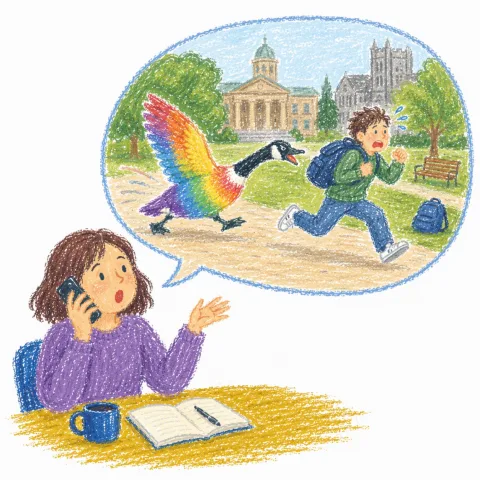
Describe something strange precisely enough that the listener can picture it.
Ready to try Describing an Unusual Situation?
Open the demo to see the exact exam interface, or create a free account to practice the full bank. Everything is free during pre-launch, no credit card required.


